12. State machines & turns 🟠
A game is a state machine: whose turn, is it over, what happens next. TTac's Match (app/Match.kt) models a
whole sitting — many rounds between the same seats — for solo, pass-and-play and LAN.
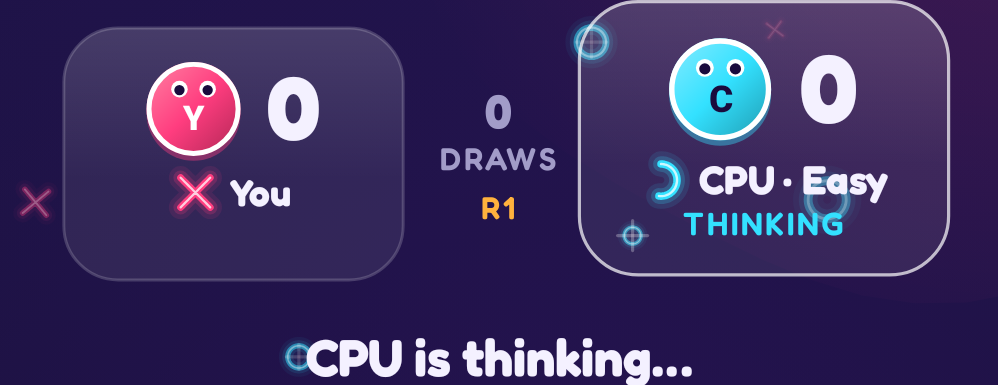
States and transitions
stateDiagram-v2
    [*] --> Turn: round starts (starter alternates)
    Turn --> AiThinking: seat is AI
    AiThinking --> Turn: move applied
    Turn --> Turn: human / remote move
    Turn --> Won: line completed
    Turn --> Draw: no line possible
    Won --> Rematch
    Draw --> Rematch
    Rematch --> [*]: both sides agree (LAN) / tap (local)
Seats, not modes
Instead of if (mode == SOLO) everywhere, each mark has a seat with a kind: HUMAN, AI or REMOTE.
val canTap get() = !isOver && !aiThinking && remoteGone == null && config.seat(turn).kind == SeatKind.HUMAN
Solo is "X human, O AI", pass-and-play is "both human", LAN is "one human, one remote". One rule covers all three.
AI turns with coroutines
aiJob = scope.launch {
    val move = withContext(aiDispatcher) { Ai.chooseMove(snapshot, me, difficulty) }   // off the main thread
    delay(thinkingTime - elapsed)                                                         // feel human
    if (round == thisRound && board == snapshot) apply(move, me)                         // still valid?
}
The guard on the last line is essential: if the player left, started a new round or anything changed while the AI thought, the move is thrown away.
Untrusted input
A LAN opponent is untrusted. Every remote move is validated before it touches the board:
if (message.round != round || isOver) return                   // stale or late
if (config.seat(turn).kind != SeatKind.REMOTE) return          // not their turn
if (message.index !in 0 until board.cellCount || board[message.index] != null) return  // illegal
Side effects through an interface
Match needs to play sounds, record stats and send network messages — but depending on Android would make it
untestable. It takes a MatchHost interface instead; the ViewModel implements it for real, and MatchTest passes a
fake that records calls.
Going further
- Rematches over LAN are a two-phase handshake: each side sets
localRematch/remoteRematch, and the round starts only when both are true — tested in both arrival orders. - Observable state (
mutableStateOf) inside a plain class lets Compose read it directly with no mapping layer.