4. Drawing marks as polylines 🟡
An ✕ that draws itself stroke by stroke — and an ◯ that sweeps round — is the signature animation of TTac. This
chapter builds it from scratch, in ui/draw/Marks.kt. Every picture below is the real board, frozen at a moment of
its animation by a screenshot test.
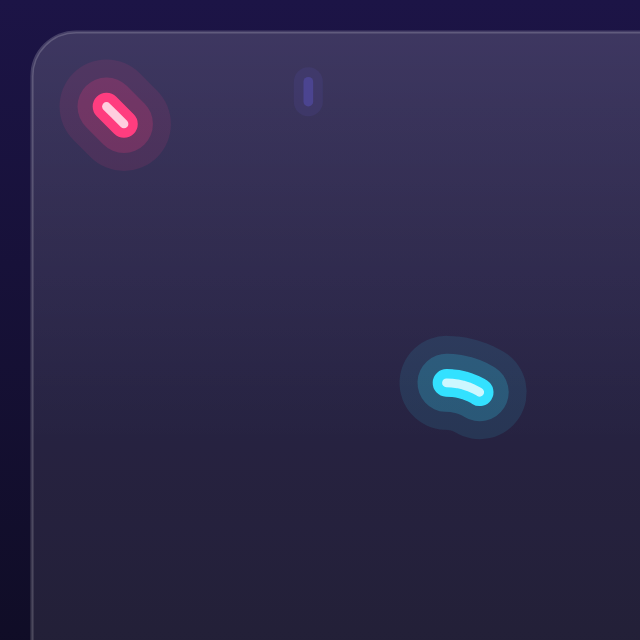
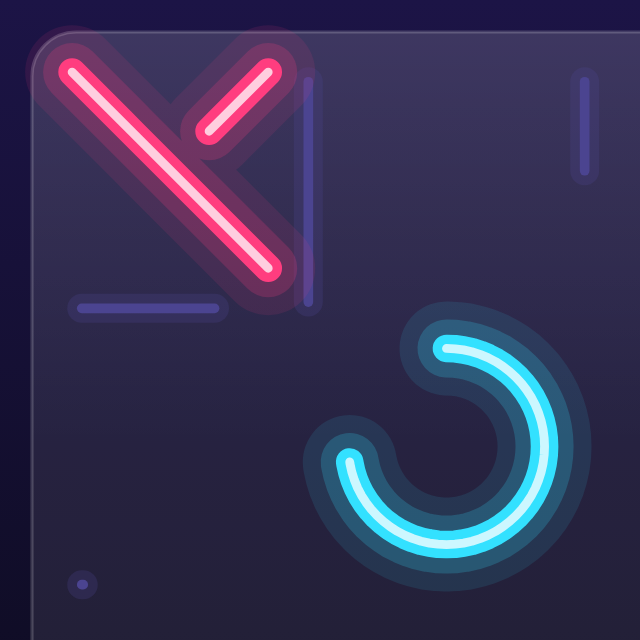
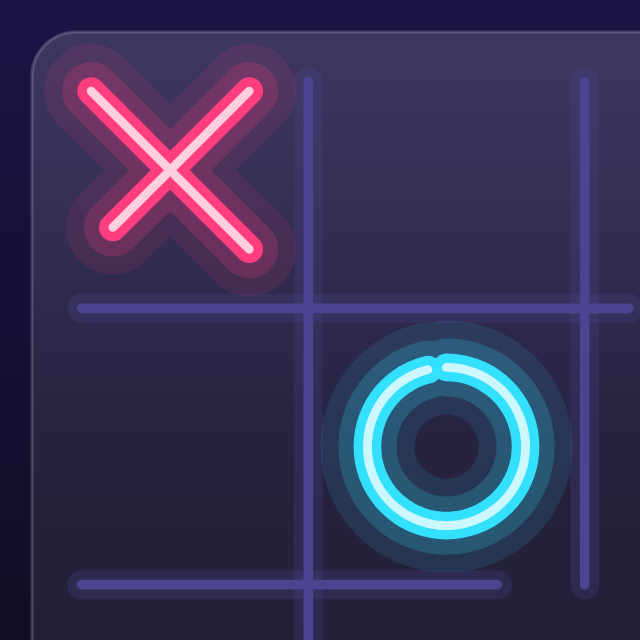
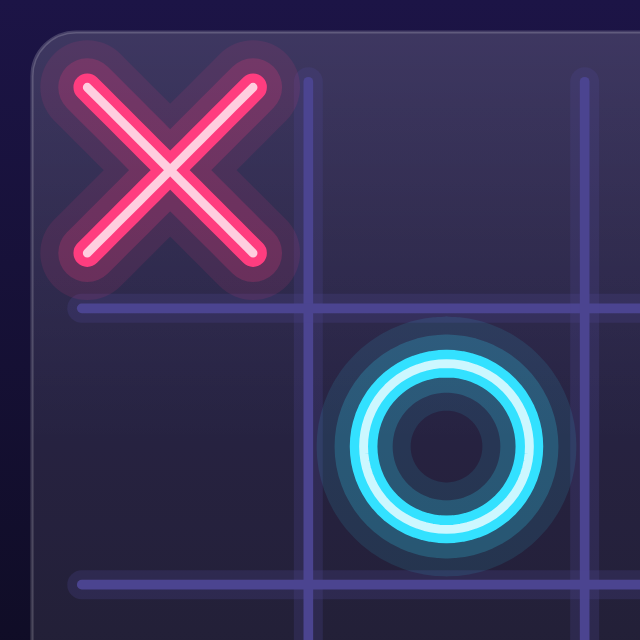
Two animations run per mark: a stroke (how much of the shape is drawn) and a pop (a bouncy scale). At 80 ms the ✕'s first stroke has barely left its corner and the mark is still small; by 300 ms the first stroke is done and the second is under way, and the pop has overshot past full size; at 700 ms both have settled.
The idea: describe shapes as points, draw a fraction of them
Rather than drawing an ✕ as two drawLine calls, TTac describes every mark as polylines — lists of points in a
unit square centred on (0, 0), spanning roughly -0.3 … 0.3:
- ✕ = two strokes of 17 points each (top-left → bottom-right, then top-right → bottom-left).
- ◯ = one stroke of 73 points around a circle, starting at the top (−90°) — you can see the ◯ above grow clockwise from 12 o'clock.
Unit coordinates mean the same geometry works for any cell size: multiply by the cell size and add the centre.
fun strokes(mark: Mark, style: MarkStyle, seed: Int): List<List<Offset>> = when (mark) {
    Mark.X -> listOf(line(Offset(-R, -R), Offset(R, R)), line(Offset(R, -R), Offset(-R, R)))
    Mark.O -> listOf(circle())
}
Why points instead of Path + PathMeasure?
Compose's PathMeasure measures one contour at a time, and an ✕ has two. Plain point lists make "draw the first
f of the total length, across several strokes" a 20-line function that's trivial to unit-test — and
GeometryTest does exactly that.
Drawing a fraction by arc length
fun partial(strokes: List<List<Offset>>, fraction: Float): List<List<Offset>> {
    var remaining = totalLength(strokes) * fraction
    for (stroke in strokes) {
        …walk segment by segment, subtracting each segment's length…
        …when a segment is longer than what's left, cut it with lerp and stop…
    }
}
Because it measures length, not point count, the pen moves at constant speed even when points are unevenly spaced (as in the Sketch style). The ✕'s two strokes are equal, so the first finishes at exactly 50% progress — which is why the 180 ms frame shows one complete diagonal and no second stroke yet.
The stroke progress is a 420 ms tween with FastOutSlowInEasing (380 ms for ◯), divided by the player's animation
speed setting.
Three styles from one geometry
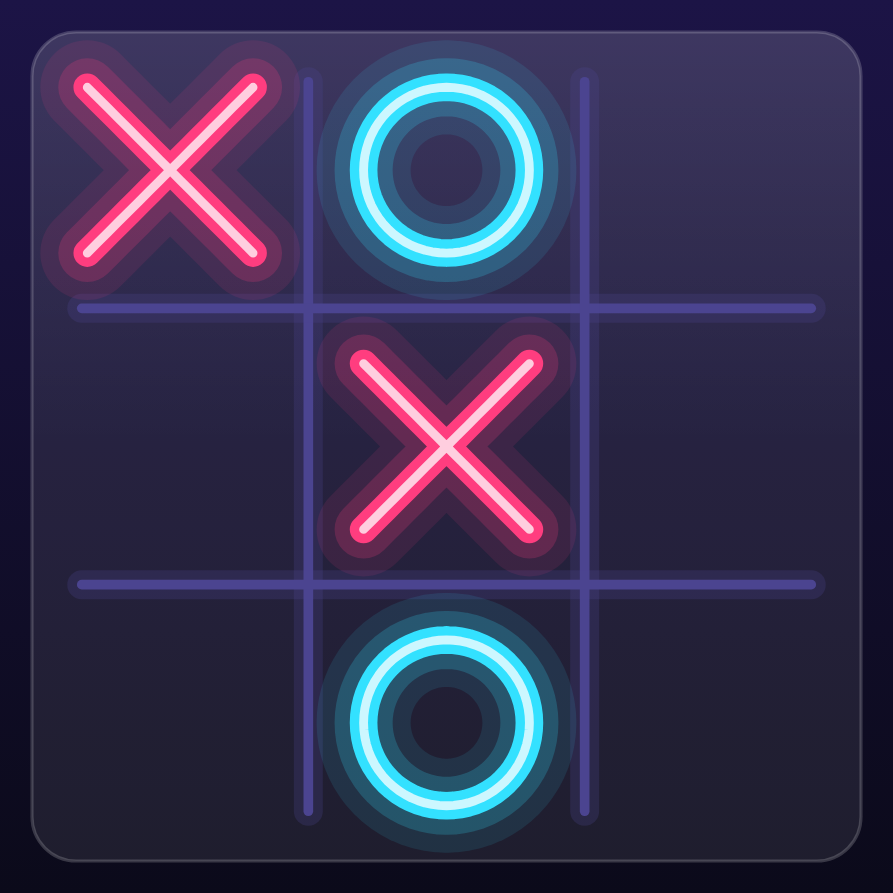
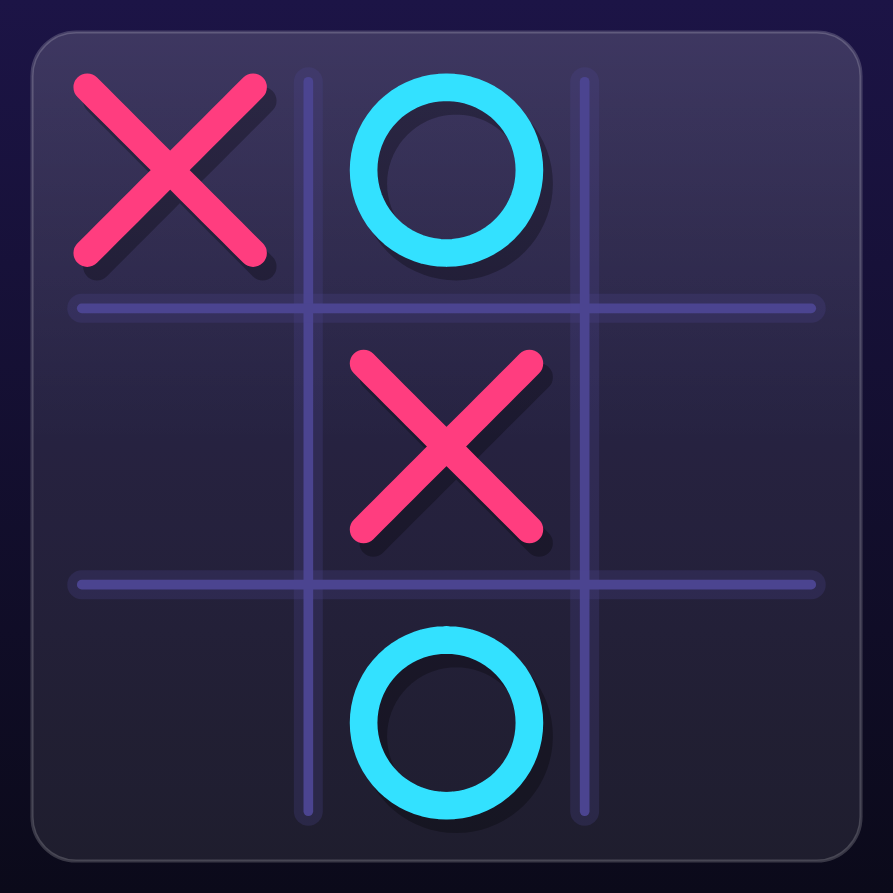
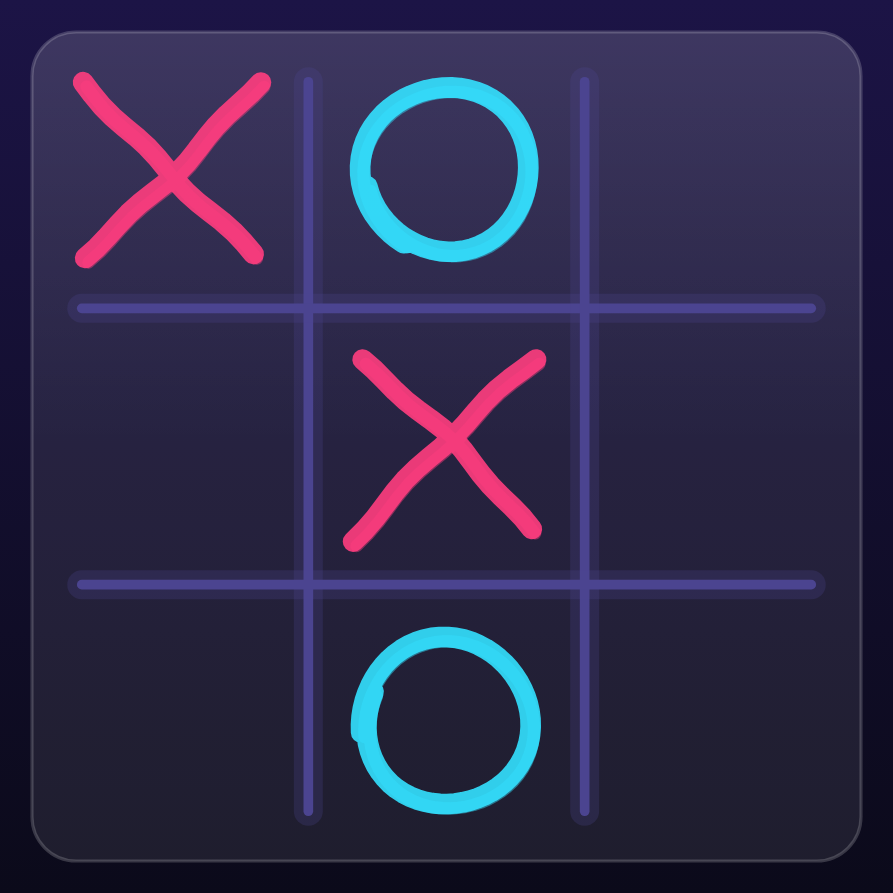
- Neon glows (below).
- Solid draws the path twice: a translucent black copy offset down-right as a shadow, then the colour.
- Sketch perturbs the same geometry: lines get a gentle bend (
sin(π·t)along the stroke), a small wobble and random overshoot at both ends; circles spiral slightly inward and don't quite close. The randomness is seeded per cell (Random(seed * 7919 + mark.ordinal)), so a mark looks the same every frame instead of jittering — compare the two ✕s in the sketch board: each has its own, stable hand-drawn shape.
How the neon glow is built
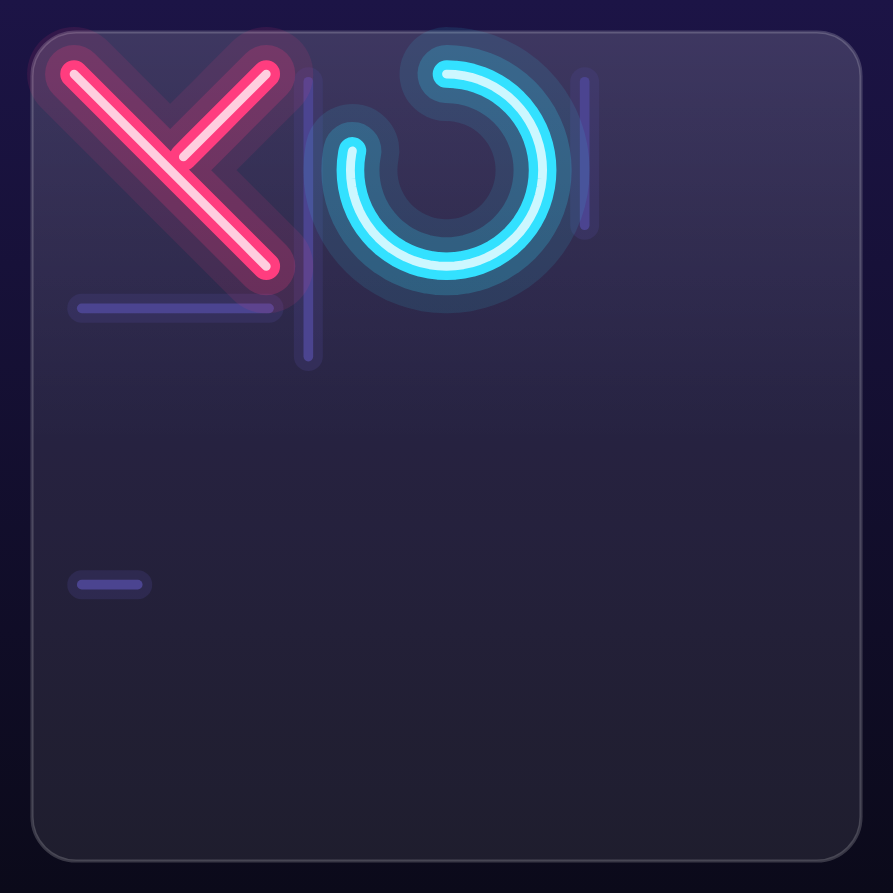
There's no blur filter. Glow is four strokes of the same path, widest and faintest first:
| Layer | Width | Colour |
|---|---|---|
| 1 | 3.4 × w | mark colour, 10% alpha |
| 2 | 2.1 × w | mark colour, 20% alpha |
| 3 | 1 × w | mark colour, opaque |
| 4 | 0.32 × w | white, 75% alpha — the "hot" core |
In the mid-stroke capture you can see the halo follow the pen tip exactly: because all four layers draw the same partial path, the glow is never ahead of or behind the line. On the light theme the glow alpha is scaled down (60%) and the white core dimmed, otherwise the glow reads as a smudge.
Pop: the bouncy scale
pop snaps to 0.45 when a mark appears, then springs to 1 with spring(dampingRatio = 0.32f, stiffness = 420f).
A damping ratio well below 1 means it overshoots (the 300 ms frame is visibly larger than the 700 ms one) and
settles. The stroke width is computed from the cell size before applying pop, so a popping mark keeps its line
weight.
Going further
- Allocation:
partial()allocates small lists per frame. For hundreds of marks you'd cache the full path withdrawWithCacheand usePathMeasure.getSegmentper contour; at ≤25 marks, simplicity wins. - The same
drawMarkrenders the logo, the twinkling backdrop stars, game-card badges and the style preview in settings — one function, many uses.